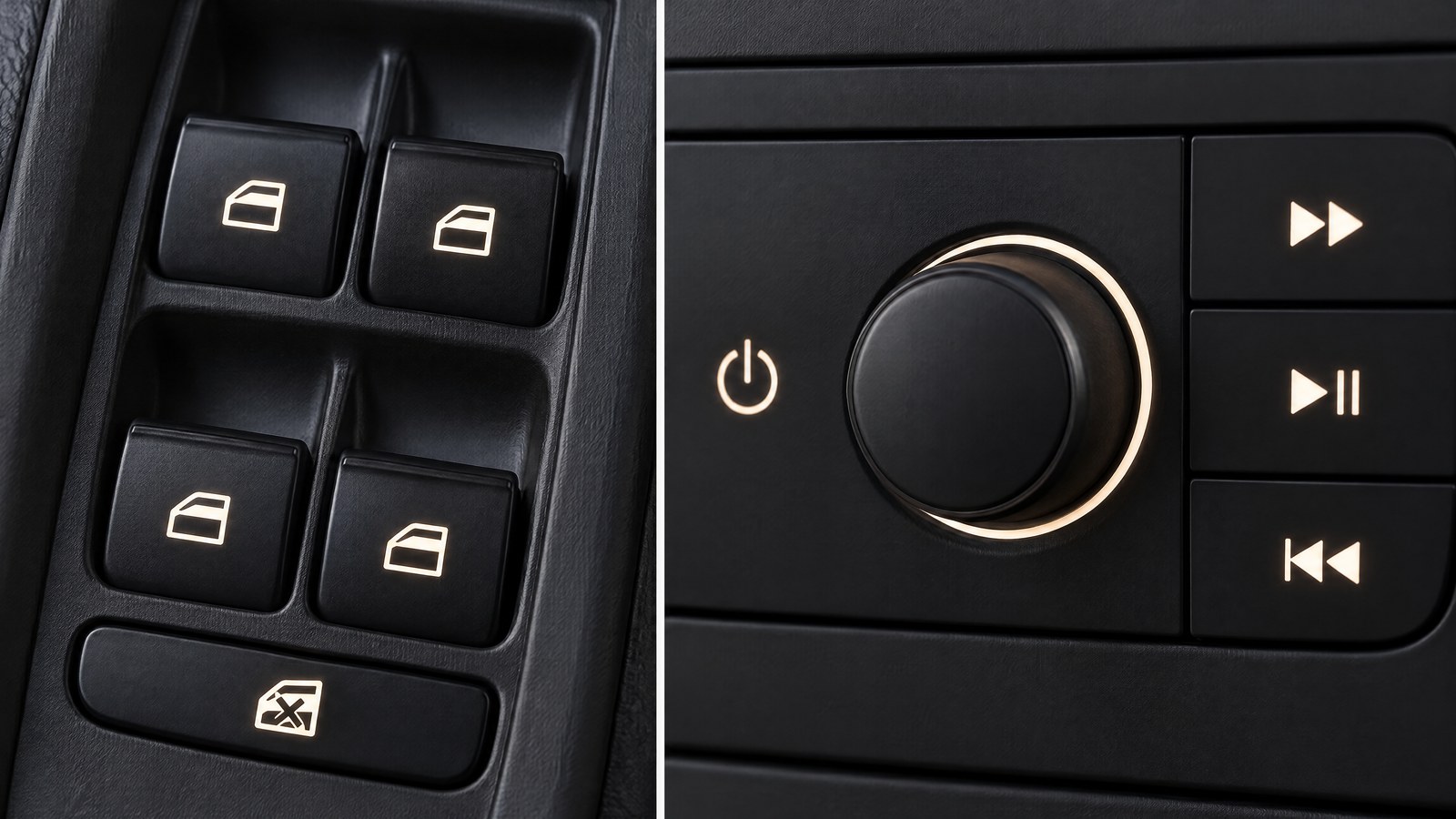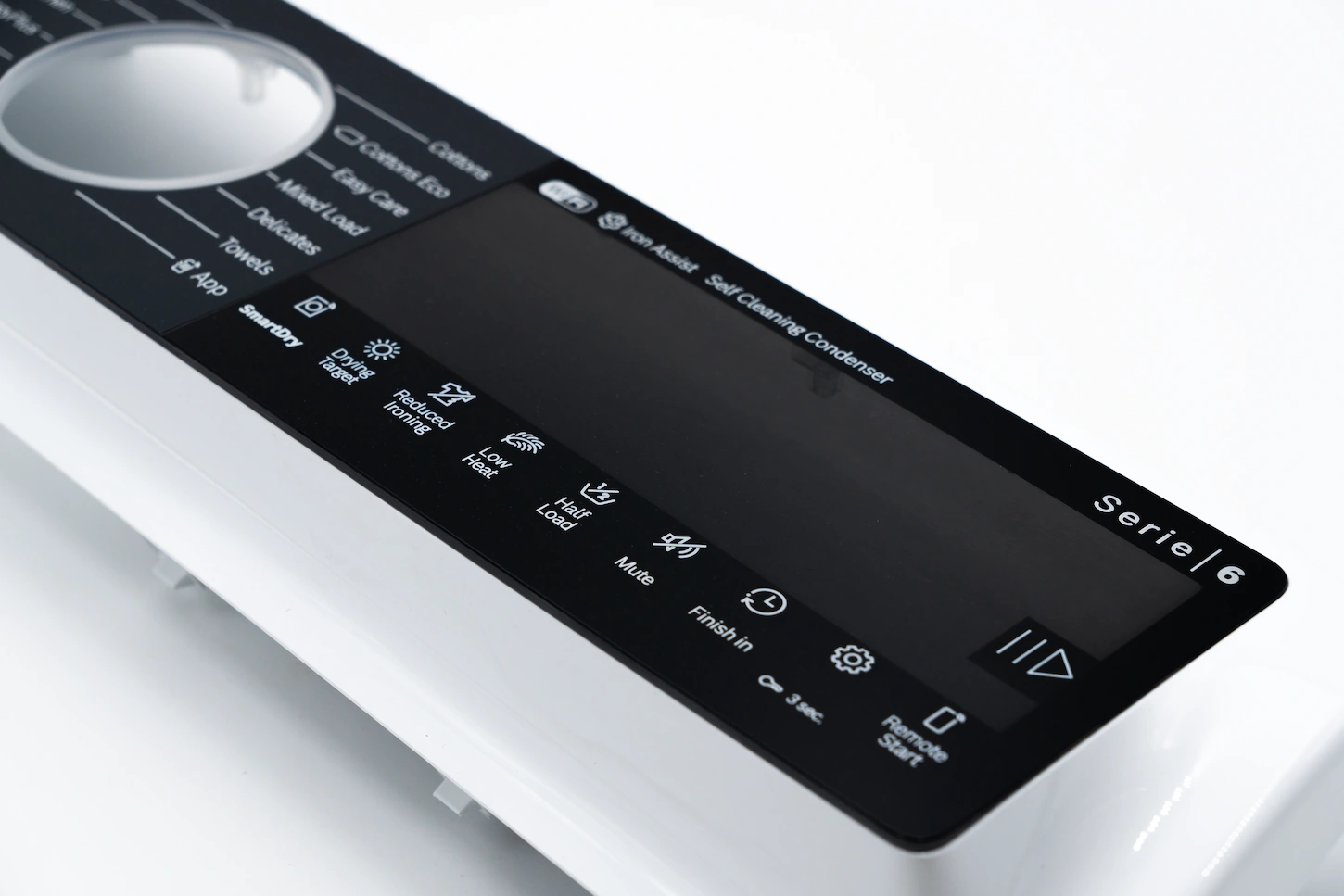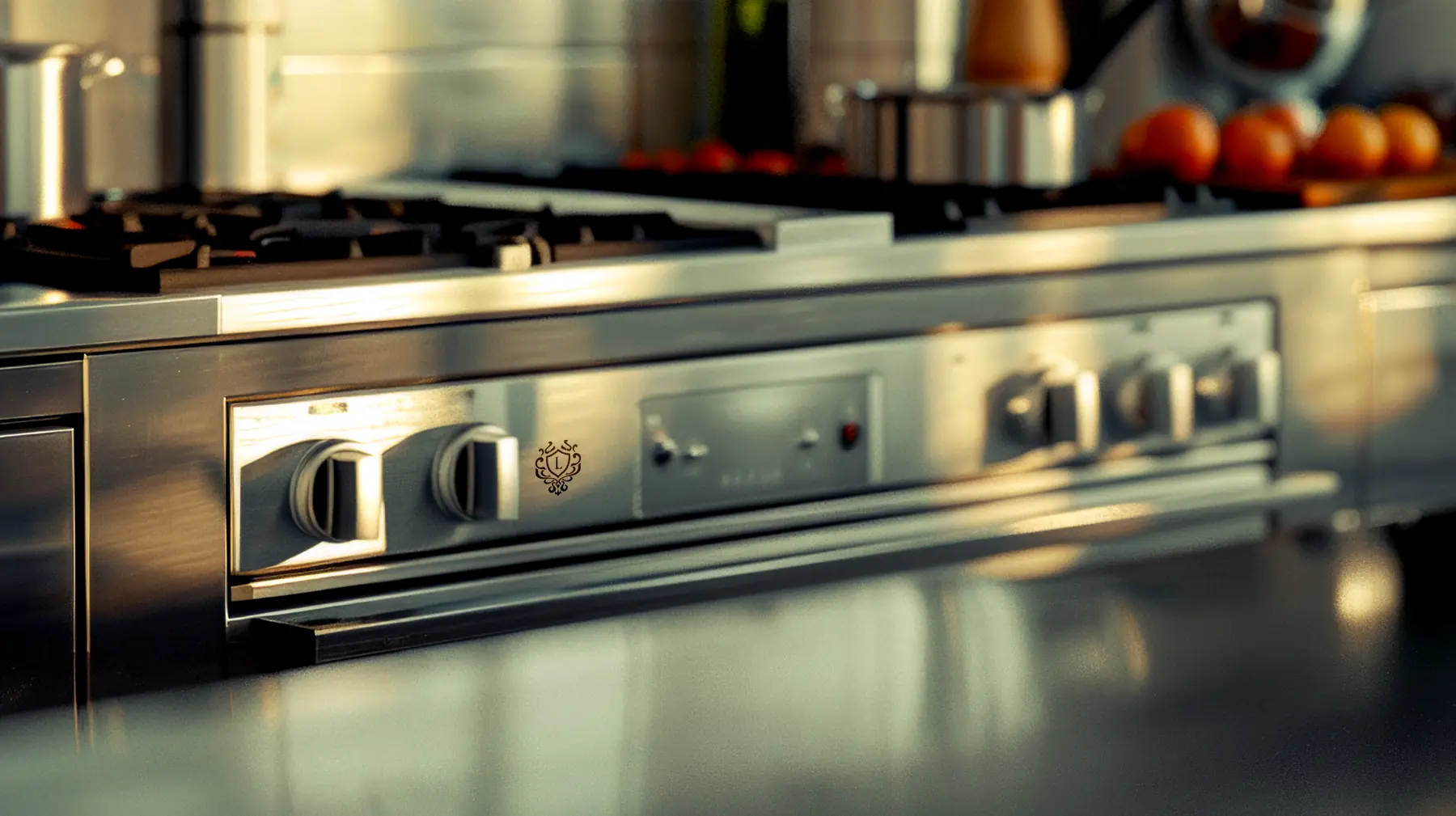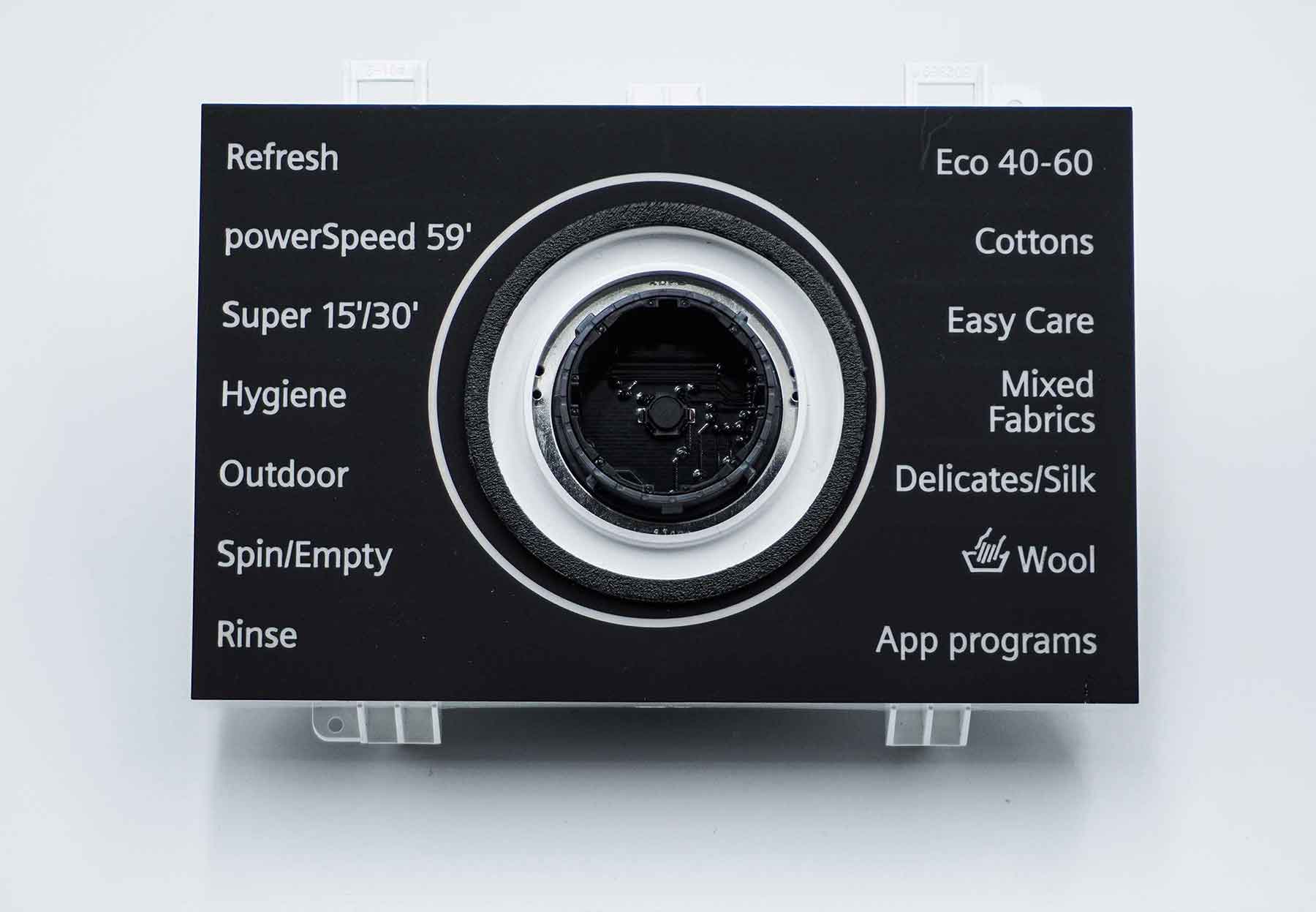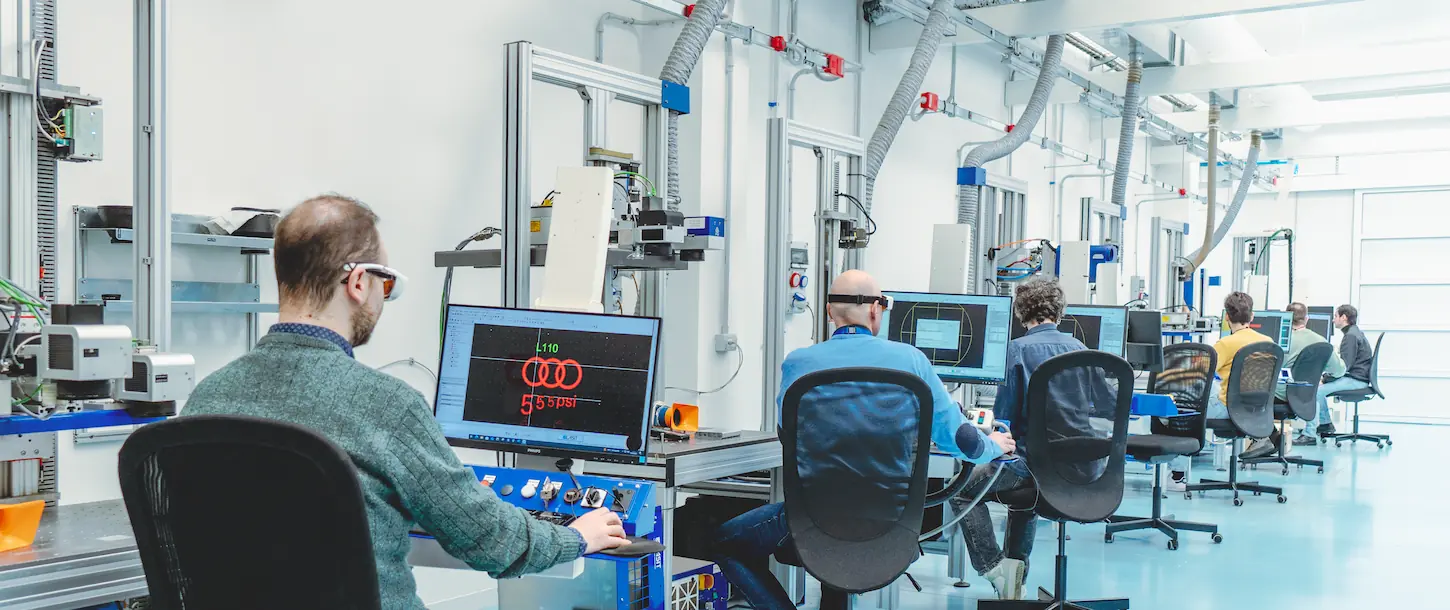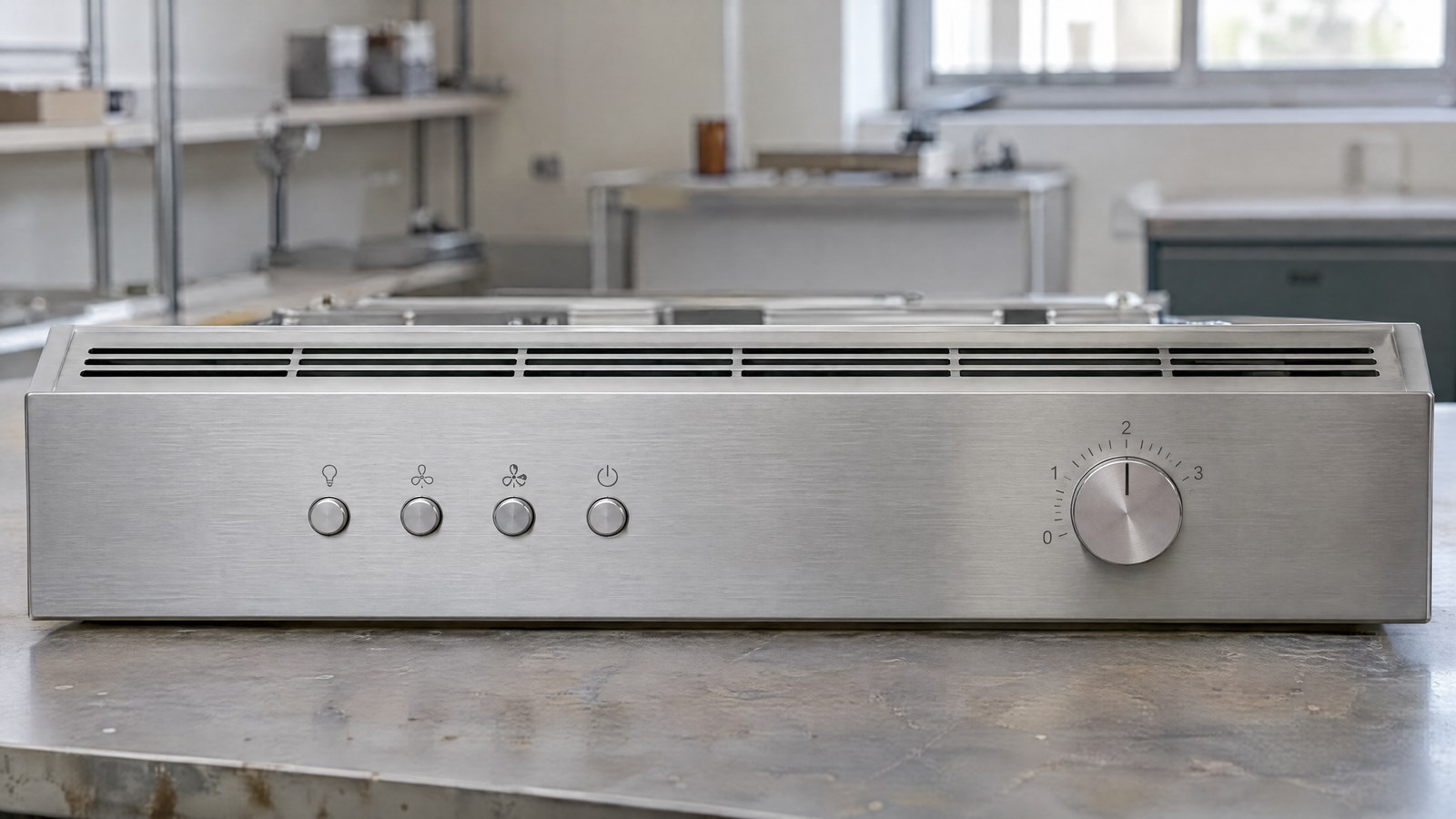
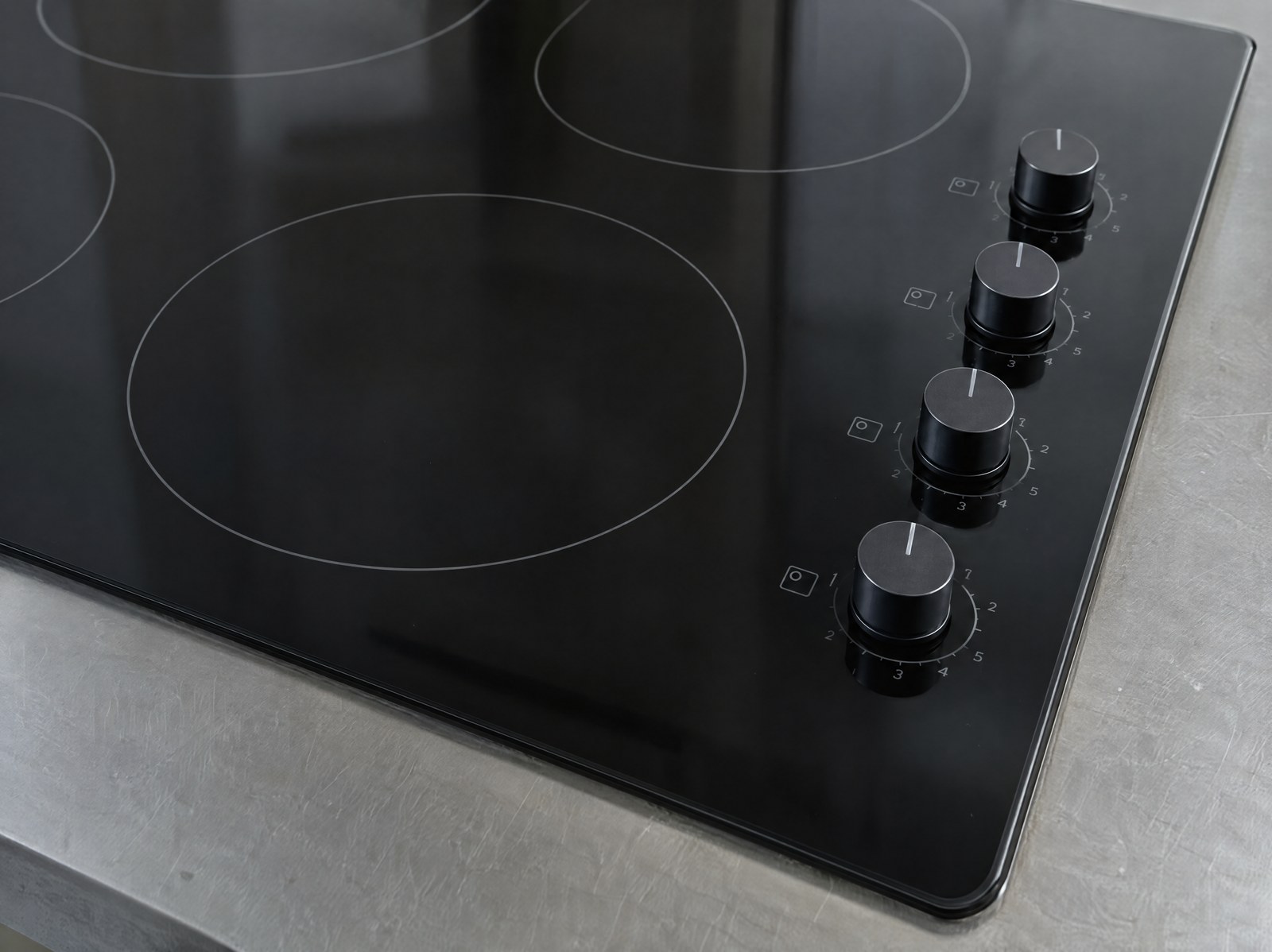
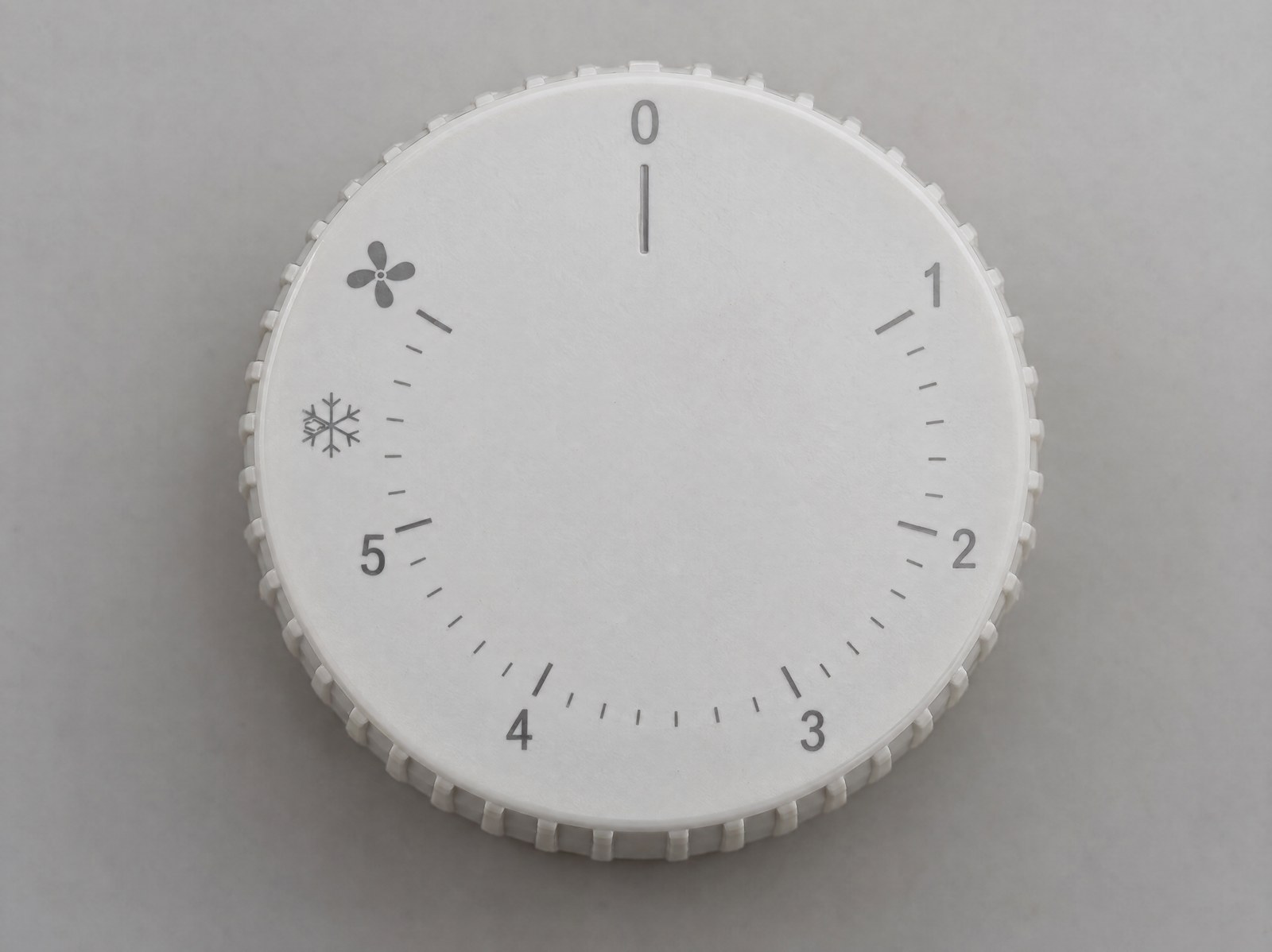
On an appliance line, it often happens that the same marking station sees very different materials pass through within a few minutes: the stainless steel front panel of a range hood, the glass panel of a cooktop, the knob or technical-plastic drawer of a refrigerator. The graphics change little — logos, functional icons, adjustment markings, serial numbers — but the substrate changes everything. And the question the manufacturing engineer faces is always the same: can a single laser source mark stainless steel, glass, and plastic well in sequence, or are separate stations needed?
The answer isn’t a simple yes or no. It depends on how the three material families react to laser light, on how high the aesthetic bar is for each one, and on how unbalanced the production mix is. There are part catalogs where a single station covers everything with no perceptible compromises, and others where that same choice forces you to give up something on every material.
The criterion for deciding between a single station and two dedicated stations isn’t a matter of power, but of how far apart the three materials are in terms of their interaction with the beam.
Why stainless steel, glass, and plastic “see” the laser differently
The starting point is the wavelength and the way each material absorbs it. The fiber source works at 1064 nm: it’s the near-infrared wavelength, efficiently absorbed by metals. On stainless steel this translates into excellent contrast control, from dark annealing without material removal all the way to deeper engraving. Glass, however, is largely transparent at 1064 nm: the beam passes through it instead of depositing energy on the surface, and the result becomes hard to control.
The UV source works at 355 nm. At this wavelength the mechanism changes in nature: the photon energy is enough to break molecular bonds directly, through a predominantly photochemical process with limited heat input. That’s why UV engraves glass with a clear, sharp mark and marks delicate technical plastics with high contrast without charring or burning the edges of the characters. In short, every material has its own absorption window, and that’s what determines which source marks it well.
UV as the broadest compromise across a heterogeneous part catalog
When the parts to be marked belong to material families that are far apart from one another, UV is the source that covers the widest spectrum with a single configuration. Glass and delicate plastics — exactly the materials where an infrared source struggles or risks a heat halo — are precisely the ground where UV performs best, thanks to cold marking. And the same beam also marks metal, with a lighter result than fiber but fully legible for logos, icons, and codes.
This is why, on a typical home appliance mix, UV is often chosen as the common denominator. It’s the same logic that makes UV the reference technology for UV laser on plastics and for UV marking on glass: a source that doesn’t ask the material to adapt, but adapts to very different materials.
Which combinations a single source truly covers
It’s worth being explicit about what a single source covers and what it doesn’t, because this is where wrong decisions get made. Fiber is excellent on all metals — stainless steel included — but on transparent glass it performs poorly. UV covers glass and delicate plastics and also marks metal, albeit with lower contrast than fiber achieves on stainless steel. From this follows a practical rule: if the mix is made of different metals, fiber is the natural choice; if the mix brings together metal, glass, and plastic, UV is the most inclusive source.
| Material | Fiber 1064 nm | UV 355 nm |
|---|---|---|
| Stainless steel | High contrast, dark annealing | Light marking, lower contrast |
| Glass | Poor absorption, difficult result | Sharp mark, cold marking |
| Delicate technical plastics | Risk of burns or halos | High contrast without burning |
The table sums up the reasoning on a qualitative basis: no source wins on every row, but UV is the only one that leaves no cell uncovered. This is exactly the kind of read you need before committing a line to a configuration choice — far better to reason about how different technologies respond to different materials than to start from the most frequent part and discover the limits on the others.
Recipe management and format changeover in a single station
A station that marks different materials lives on recipes. Each family — stainless steel, glass, plastic — has its own process parameters and its own graphic layout, saved as a recipe in the FlyCAD software and recalled when the part comes in. The format changeover isn’t a heavy tooling operation: it’s the switch from one recipe to another, with focus adjustment when the part height changes. The electric Z axis brings the work plane to the correct height without disassembling anything.
Format change at a single stationMaterial recipe recallFocus adjustmentPart positioningMarkingThe robustness of this flow lies in recipe discipline, not in improvised automation. Parameters validated on real samples, frozen layout, focus tied to the known part height: that’s how the same station goes from the stainless steel front panel to the plastic knob while keeping a repeatable result mark after mark.
Positioning heterogeneous parts under the same field
Marking different materials in the same station also means positioning them consistently under the laser field. Parts of very different shape and size require fixtures that set their references in a repeatable way, so the graphics always fall within the intended area. Where the part or the graphics don’t have a perfectly deterministic position, a TTL vision system locates the reference and aligns the marking, correcting small loading deviations.
The factor that weighs most, when marking heterogeneous parts, is the difference in height. A flat front panel and a turned knob don’t sit on the same focal plane: without orderly management of the focus height, the same recipe that’s perfect on one part comes out out of focus on the other. It’s a trivial point to check during the study phase and a costly one to discover in production.
When the three materials are too far apart: two stations are better
The single station has a real limit, and it’s worth naming it. When the aesthetic bar diverges between materials, the compromise of a single source becomes visible. If stainless steel requires deep, dark annealing at very high contrast and, at the same time, glass and delicate plastics require impeccable cold marking, asking a single source to excel on both fronts means accepting a less-than-optimal result somewhere. In that case two dedicated stations — a fiber for metal, a UV for glass and plastic — are the technically more honest choice.
The mix matters too. If volumes are high and skewed toward one material, the constant recipe changes on a single station fragment the cycle, while two stations allow each flow to run without interruptions. Separation, in short, isn’t a fallback: it’s the right answer when required quality and production cadence pull in different directions. The same principle guides the choice of source in dedicated projects, as in the UV marking of refrigerator drawers, where the material dictates the technology.
The criterion for deciding: one station or two
The deciding line comes down to three questions. First: how far apart are the materials in terms of absorption? If they all stay within the UV window, a single source covers them; if one of them demands a result that only another source delivers, you’re already reasoning about two stations. Second: is the aesthetic bar the same on all parts, or much higher on some? Aligned requirements favor the single station, divergent requirements penalize it. Third: what’s the volume mix and the cadence like? Moderate, balanced volumes coexist well with recipe changes; high, skewed volumes call for separate flows.
The single UV-based station is the right choice for those marking a varied part catalog — stainless steel, glass, and plastic — with aligned aesthetic requirements and manageable volumes, and who want a single interface and a single point of oversight. It’s not the right choice for those who need maximum annealing contrast on metal together with high-end cold marking on glass and plastic, at high volumes: there, two dedicated stations work better than one that tries to do everything. The decision, as always, is made on real samples before it’s made on the line drawing.

Business Development Director | LASIT
Business Development Director at LASIT, Giandomenico Ievoli is responsible for the commercial direction and strategic development of the company. He leads business development activities at national and international level, contributing to the growth and expansion of LASIT in global markets.