Picosecond laser: the best fiber laser for reflection-free markings

This fiber laser technology is being increasingly used in many applications and will become even more popular in the future. It was initially conceived for laser marking in the medical and home appliance (cooking division) sectors. Today, it is used on a large scale, as it ensures high quality marking. Even budget becomes secondary.

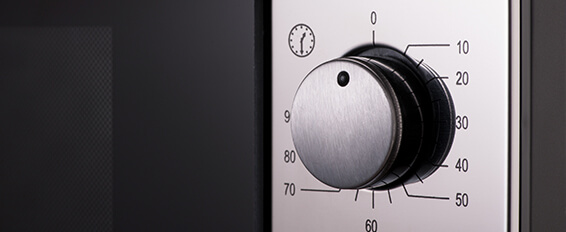
As for medical device manufacturers, picosecond marking laser ensures black marking without reflections. Moreover, laser marking with picosecond resists citric and nitric passivation cycles (a traditional fiber laser would fail the second test). As for cooking devices, picosecond laser marking succeeds in chemical and abrasion tests.

Laser-marking-cooking Picosecond laser: the best fiber laser for reflection-free markings

What makes this type of laser superior?

Not all laser marker manufacturers are using this technology. LASIT is one of the first companies to have experimented it. Having tested it on some components, we have identified the following advantages:

  • Impalpable black marking
  • High contrast
  • No oxidation problems
  • It’s 3 times faster than traditional fiber laser
  • Top finishing even in deep engravings

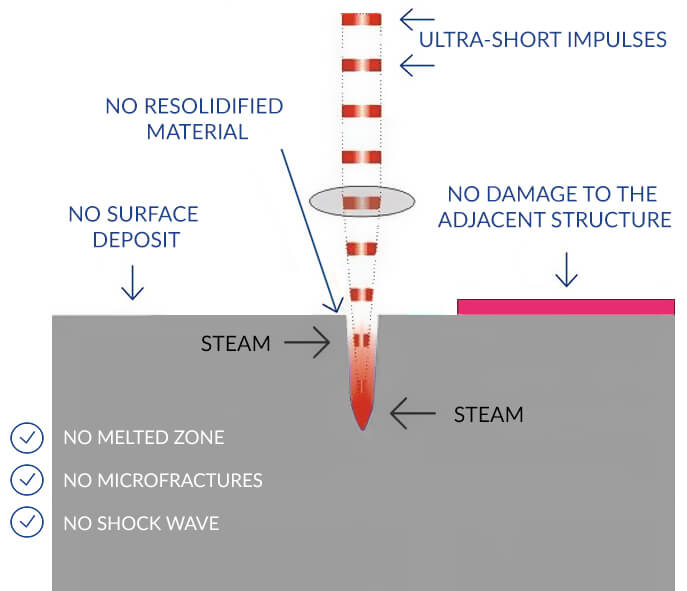
The ultra-short pulse duration allows picosecond laser to mark materials that infrared nanosecond lasers can’t, like micromachining of glass.

Moreover, its almost cold ablation makes it suitable for a wide range of materials and applications. 

This feature minimizes, if not eliminates, heat transmission. Think, for example, about processes in the aerospace sector, in which material heat distortion does not allow laser processes.

Picosecond laser: technical characteristics

Besides quality, picosecond laser ensures durability. Its average duration is of about 100,000 operating hours, and in this time the need for maintenance is almost zero.

As regards the technical characteristics that allow it to achieve such high performance, these are:

Ultra short pulse duration (2ps), which allows you to reach a peak power of 10 MWPossibility of processes unthinkable with a traditional infrared laser such as high contrast black marking and micromachining processes on various materials
Wide frequency range (from 50kHz to 2000kHz while we usually work with frequencies between 500 and 1000kHz)Greater execution speed
Wavelength of 1030nm, slightly shorter than the traditional 1064nmIncreased compatibility with materials
High beam quality (M2 = 1.2)Smaller spot and therefore higher energy density
Water cooling with chillerMaximum stability of the system over time
Post content

Learn how our solutions can transform your processes

Related Articles