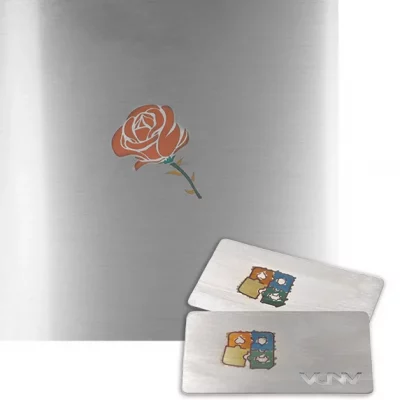
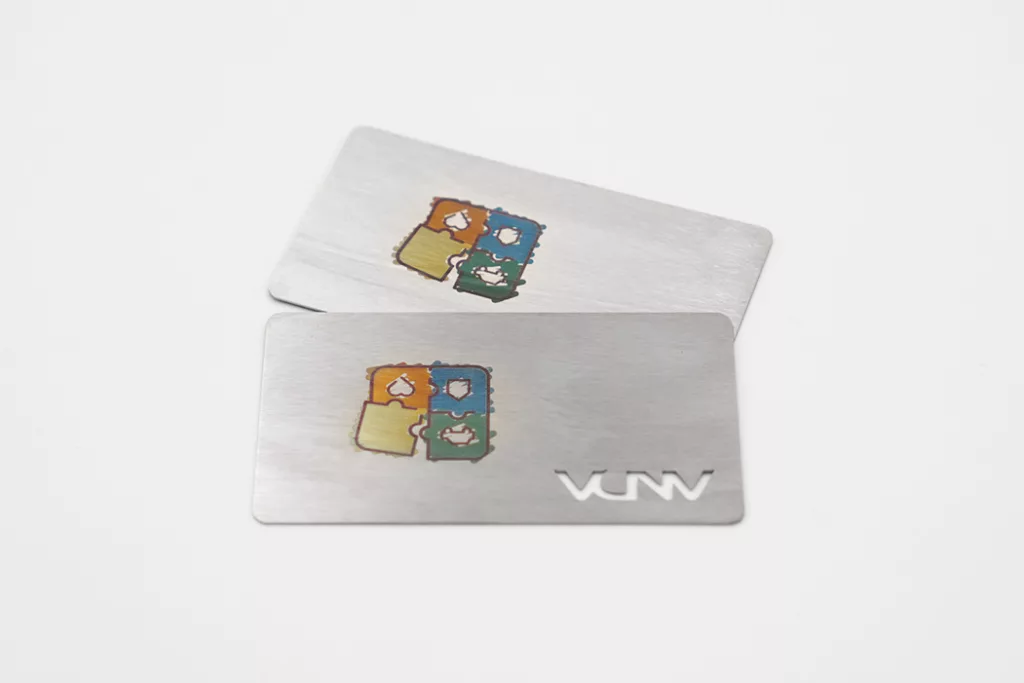
Colored laser marking: what it is and how it works

Until a few years ago, color laser marking was limited to black only. The laser had this limitation compared to other technologies: inkjet printing or pad printing, in fact, had long allowed for multicolor graphics. This represented a major disadvantage for the laser, especially in sectors where product aestheticsis the main goal (promotional, medical, cosmetic, luxury automotive). Today, thanks to the development of new laser sources-particularly MOPA technology-and greater precision in parameter control via software, the situation has changed dramatically. Achieving bright and stable colors is not only possible, but also repeatable with excellent production reliability.

How does colored marking work?

Color marking is a process based on the interaction between the laser and the material surface through the controlled formation of an oxide layer of varying thickness. This layer alters the refractive index of light, generating optical interference that results in different visible colors depending on the thickness formed and the type of material being worked on.

The pulse length and other variables of the laser determine the amount of energy that is used to heat the surface of the material. This makes it possible to achieve controlled, localized surface oxidation of the product. In addition, very precise focusing of the area to be processed is required to ensure the color marking process.

Since there is no material removal or mechanical etching, this is a purely physical surface modification that is highly valued in areas where maximum cleanliness and part integrity is required.

Below you can view a video of colored marking made on an AISI 304 steel plate with a 30-watt MOPA fiber laser.

On what materials can colored laser marking be performed?

As with any type of laser application, the effect and parameters are very different when we talk about laser marking on metals or marking on plastics.

Today, colored marking of steel is very popular, as it is the material that responds best and on which a wide range of colors can be made. In fact, colored marking is only possible on materials that can be oxidized in a controlled manner and show clearly visible color interference.

Again, the parameters that affect the result are laser frequency, power, speed, focal distance and others.

Applicable materials for metal color marking include:

  • Stainless steel: the most widely used, allowing a wide and stable color range.
  • Titanium: excellent response to MOPA parameters, with intense and defined colors.
  • Chrome and chrome alloys: more limited colors but good response to precise parameters.
  • Other polished metals (copper, brass): theoretically markable but less stable over time.

Plastics per se are not suitable for color marking by oxidation because they do not form an oxide layer compatible with this type of optical effect. However, there are specific pigmentations and additives that can react with laser light to produce color variations (however, it is not considered “color” marking in the strict sense, but rather a thermal/pigmental effect).

The perfect laser for color marking

For this type of process we always recommend the MOPA fiber laser, which because of its characteristics and performance is the most suitable one. In fact, the Master Oscillator Power Amplifier system (precisely the MOPA laser), allows for varying laser waveforms with pulse durations ranging from 1ns to 350ns and a variety of Frequency/Energy combinations per pulse.

Compared with the standard fiber laser, the MOPA enables:

  • Precise laser pulse control: essential for adjusting oxide thickness.
  • Flexibility in waveform: useful for adapting the laser to different materials.
  • Wide frequency range (from a few kHz to > 1 MHz): essential to properly manage heat input.

In addition, with the ability to adjust energy per pulse, overlap between spots, and power density, the MOPA laser provides superior aesthetic quality compared to other systems.

Post content

Learn how our solutions can transform your processes

Related Articles