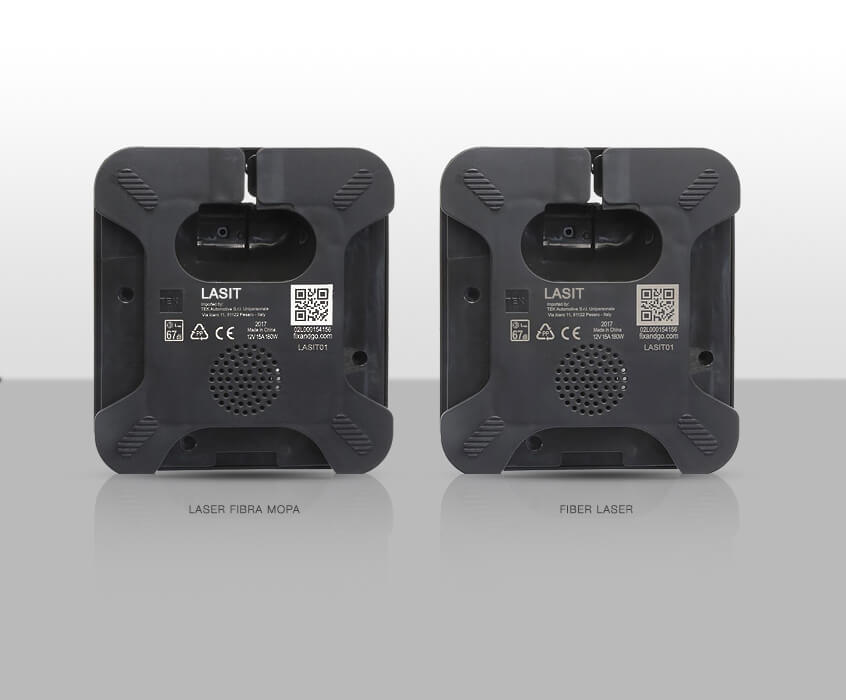
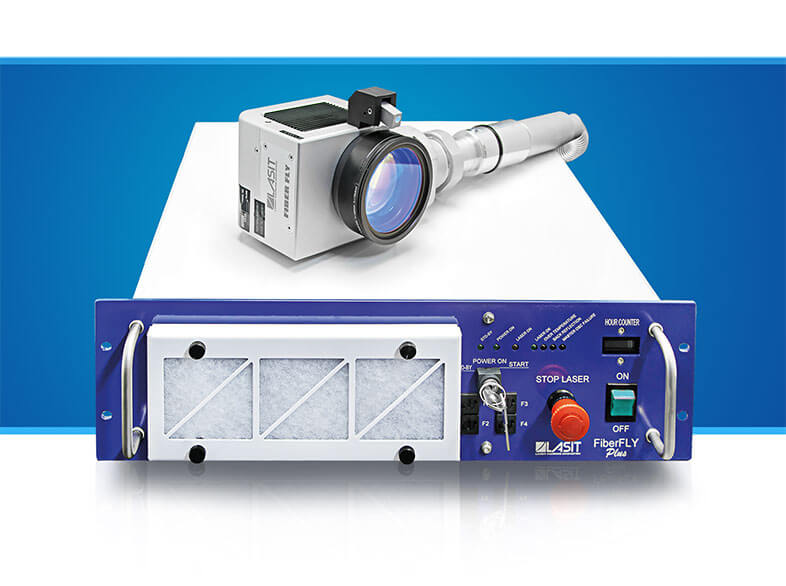
When we talk about LASERS, we must keep in mind three macroscopic measurement parameters:
- Frequency (or rather the number of pulses in relation to a length of time) -> kHz
- Power -> W
- Speed -> mm/s (or px/s)
Laser pulses are usually fixed: with standard fiber lasers, a pulse has a duration of about 120 ns, while the pulse frequency varies from 20 to 100 kHz.
Instead, with MOPA lasers, pulse duration varies and can be set in a range from 4 to 200 ns, with a frequency ranging from 20 kHz to 1 MHz. The short pulse is especially useful for marking on plastics, as it prevents burning the material by avoiding direct contact.

What are the benefits of a variable pulse?
The MOPA laser maintains the benefits of traditional Fiber (no maintenance, long life and air cooling) but can boast a number of added values for marking both plastics and metals.


The initial drawback of this technology could be its price, but the difference with a traditional fiber is so minimal that it is largely compensated by its application flexibility.
However, it is worth specifying that, if we have to mark natural aluminum or die-cast products, a traditional fiber laser may be sufficient to achieve high quality results.
In conclusion, when is it worth using?
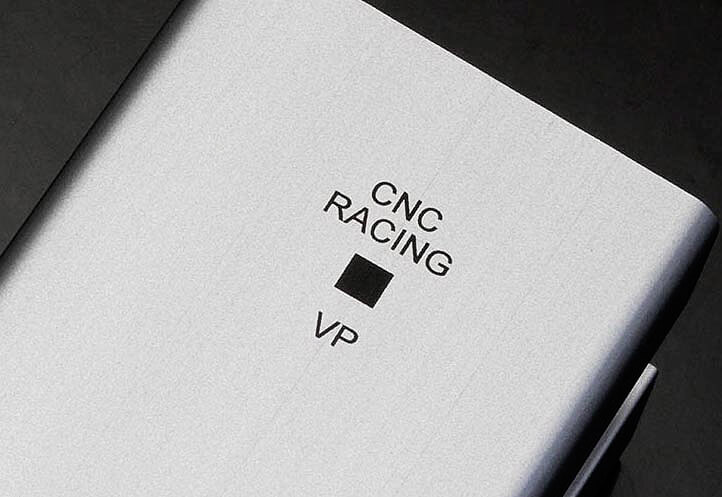
- Laser marking on metals and plastics
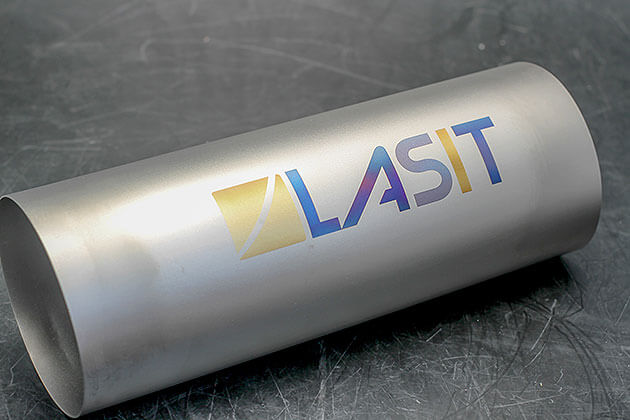
- Colored laser marking
- Marking with the coating process